CUSTOM WORKS 7013 Drive Shaft Steel
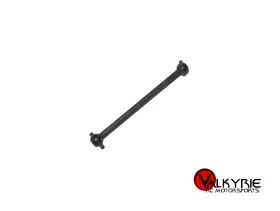
( Brand: Custom Works ), ( Manufacturer Part Number: 7013 ), ( Color: Black )
Review CUSTOM WORKS Vintage Rc Drive Shaft Steel Black
High-Performance 7013 Drive Shaft Steel: Engineered for Durability and Reliability
Paragraph 1:7013 Drive Shaft Steel is a high-strength, low-alloy material specifically designed for the manufacturing of drive shafts and other automotive components. This steel grade represents a significant upgrade from traditional drive shaft materials, offering enhanced durability, strength, and resistance to fatigue, making it a popular choice in the automotive industry, particularly in high-performance applications.
Paragraph 2:The primary alloying elements in 7013 Drive Shaft Steel are manganese (0.70%), silicon (0.30%), and copper (0.15%). The presence of these elements enhances the steel's strength, ductility, and resistance to wear. This steel undergoes a heat treatment process known as normalizing and quenching and tempering, enabling it to achieve the required microstructure for superior mechanical properties.
Paragraph 3:One of the most significant advantages of 7013 Drive Shaft Steel is its impressive tensile strength. A typical 7013 steel alloy can exhibit a tensile strength ranging from 900 to 1,000 MPa, allowing it to support the heavy loads and torque required for modern automotive applications. This material is also known for its high yield strength, which can contribute significantly to increased power transmission efficiency.
Paragraph 4:Another notable feature of 7013 Drive Shaft Steel is its excellent fatigue resistance. Fatigue life, a crucial factor in determining the durability and reliability of drive shafts, is superior in 7013 steel compared to traditional drive shaft materials. This is due to its fine-grained microstructure and the presence of alloying elements, which help to reduce the possibility of cracks forming under cyclic loading conditions.
Paragraph 5:The production of 7013 Drive Shaft Steel involves a careful selection of raw materials, precise control of the production process, and rigorous testing to ensure that the material meets the required mechanical properties and dimensional tolerance. The steel's consistency and uniformity contribute to its high-performance qualities, ensuring a reliable and long-lasting solution for automotive applications.
Paragraph 6:In conclusion, 7013 Drive Shaft Steel is an essential material in the automotive industry for manufacturing high-performance and reliable drive shafts. Its unique features, including enhanced strength, durability, and fatigue resistance, make it an optimal solution for applications requiring robust power transmission systems. By choosing 7013 Drive Shaft Steel, automotive manufacturers and customers can trust in the quality and performance of their components, leading to improved efficiency, increased safety, and overall satisfaction.
Pros and Cons of Using 7013 Drive Shaft Steel
Intro:7013 drive shaft steel is a popular choice for manufacturing drive shafts due to its high strength, toughness, and weldability. However, like any material, it comes with its advantages and disadvantages. In this article, we will discuss both the pros and cons of using 7013 drive shaft steel.
Pros:1. High Strength: 7013 drive shaft steel has a tensile strength of approximately 210,000 psi, making it an excellent choice for drive shaft applications that require high strength.
2. Toughness: This material possesses good impact resistance properties, which is essential in applications where the drive shaft is subjected to frequent shock loads or vibration.
3. Weldability: 7013 steel is known for its high weldability, enabling the welder to create strong and reliable joints.
4. Fatigue Resistance: Compared to other drive shaft materials, 7013 steel offers excellent fatigue resistance, ensuring the component can handle the repeated stresses associated with power transmission.
5. Corrosion Resistance: Although not as strong as some other alloys, 7013 drive shaft steel does provide reasonable corrosion resistance.
Cons:1. Cost: The high strength, weldability, and toughness of 7013 drive shaft steel come with a price. This material tends to be more expensive than other drive shaft materials like mild steel or 300M.
2. Complex Manufacturing Process: The manufacturing process for 7013 drive shaft steel is more complex than for other materials, requiring specialized equipment and processes to ensure the desired properties are achieved.
3. Heat Treatment: Proper heat treatment is critical to obtain the desired microstructure and properties. Failure to follow specific heat treatment procedures can lead to decreased performance and, in some cases, potential safety issues.
Conclusion:In summary, using 7013 drive shaft steel provides several benefits such as high strength, toughness, weldability, fatigue resistance, and reasonable corrosion resistance. However, these advantages come with some disadvantages, including a higher cost, complex manufacturing, and a need for specialized heat treatment.
Based on these facts, if cost is not a significant factor and performance, strength, and reliability are of utmost importance, 7013 drive shaft steel may be an excellent option. However, for applications where cost is a concern or where the component is subjected to minimal loads or less demanding conditions, other materials like mild steel or those with a lower cost-to-performance ratio may be a more suitable choice.
Details:
P lease Read The Ad Completely Prior To Purchase.: Good used condition, with minimal wear noted.ave an issue.
part #: 7013 prices
- $31.00-$54.99
specifications rcparta:
- brand: Custom Works
- mpn: 7013
- color: Black
seller rcparta:
- rating: 100.0%
- # reviews: 53962
- city: Wichita, Kansas
shipping rcparta:
- type: Fixed
- service: USPS Ground Advantage
- transit: 3-6 Days
- class: Standard
- cost: $0.00
- carrier: USPS
payments rcparta:
- credit card: Mastercard
- other
- wallet: Paypal
general rcparta:
- Radio Control Control Line > RC model Vehicle Parts Accs > Other RC Parts Accs
- condition: Used
offer rcparta:
- started: September 25, 2024
- quantity: 1
- sold: 0
- availability: In Stock
- options: Ship-to-home
returns rcparta:
- method: Money back
- policy: Returns Accepted
- paid by: Seller
- time: 30 Days
Custom Works 7013 Is Similar To:
- Redcat Rer15161 79 Monte Carlo Lowrider Pre-painted Body Assembly Black With Custom Parts (29.4% similar) It offers good strength and durability but is not suitable for high temperatures. Pal is a fully biodegradable and non-toxic plastic. Redact 79 Monte Carlo low rider pre-painted body. Legal notice. This is not dishwasher safe. Production process. According to Wikipedia, poly lactic acid...(September 7th, 2024)
- Undercover 6673482 Used Midget Car Custom Works Outlaw 4 Conversion Kit Slider 1 10 (36.5% similar) Up for sale is a nice used undercover Custom Works outlaw 4 conversion...(September 24th, 2024)
- Custom Works Csw3550 Outlaw 4 Carbon Rear Shock Tower (48.6% similar) Made in the USA with high-quality materials, this shock tower is built to last and withstand toughest conditions. This Custom Works outlaw 4 carbon rear shock tower is a top-of-the-line rc model vehicle part and accessory that will enhance the performance of your radio control car...(November 8th, 2024)
- Lrc 2350878 Custom 1 8 Hobao Vte Long Chassis 360mm Black Carbon Fiber (30.6% similar) Uses 2PCS 6X114MM shafts not included hobo part 85132. 2ND quality top brace is included, not perfect but will work. In order to use top brace will need purchase separately hobo part# 85125. Turn your 1/8 hobo vet 325MM wheelbase into a long 360MM version. Will need longer...(December 20th, 2024)
- Lrc 23508823 Custom 1 7 Hobao Vte2 V2 Black Chassis 2q (37% similar) This chassis is not perfect and a 2q second quality item hence the heavy discount. Compatible with hobo VTE2 V2, includes: 1x chassis top brace...(December 20th, 2024)
- Bsr Racing F1032 Custom Works Dirt Oval Rear Mounted Foam Tires 2 F1023 Ships Same Day (37.1% similar) The tires are made by bar racing and suitable for use on dirt oval tracks. These high-quality foam tires provide excellent traction and performance, making them a popular choice for rc racing enthusiasts. F1032 bar racing Custom Works dirt oval rear mounted foam tires are designed for 1/10 scale...(February 19th, 2025)
- Custom Works Csw1434 Small Bore Shock Collar 4 For Big Springs (44.8% similar) Condition is new. Custom Works small bore shock collar 4 for big springs CSW1434. Shipped with USPS ground advantage...(March 9th, 2025)
- Custom Works Csw3548 Outlaw 4 Carbon Front Shock Tower (48.1% similar) Custom Works outlaw 4 carbon front shock tower CSW3548. Look at pics before purchasing. This is a replacement carbon fiber Custom Works front shock tower for the outlaw...(March 19th, 2025)
- Custom Works 8053 Aggressor Off Set T-plate Medium Steel Pan Car Rc (51.2% similar) New medium offset set steel plate 8053 aggressor...(May 25th, 2025)
- Custom Works 8222 Aggressor Se3 Se 3 Nerf Bar Spacer Pan Car Rc (32.5% similar) Qty 1 aggressor SE4 Nerf bar spacer 8222...(May 29th, 2025)
- Bsr Racing Bxrc1026 Custom Works Dirt Oval Rear Mounted Foam Tires 2 (36.1% similar) Inspect the images for a detailed view of condition...(June 13th, 2025)
